
When it comes to monetizing a blog, Google AdSense is often the first choice for bloggers looking to generate passive income. As one of the most trusted advertising networks, AdSense offers an easy and effective way for publishers to earn moneythrough display adson their websites.
But how can you make sure your blog is ready to be monetized with AdSense? What types of blogs work best, and what are the best practices for maximizing revenue?
1. What Is Google AdSense And How Does It Work?
Google AdSense is a pay-per-click (PPC) advertising network that allows website owners to earn revenue by displaying ads on their site. Here’s how it works:
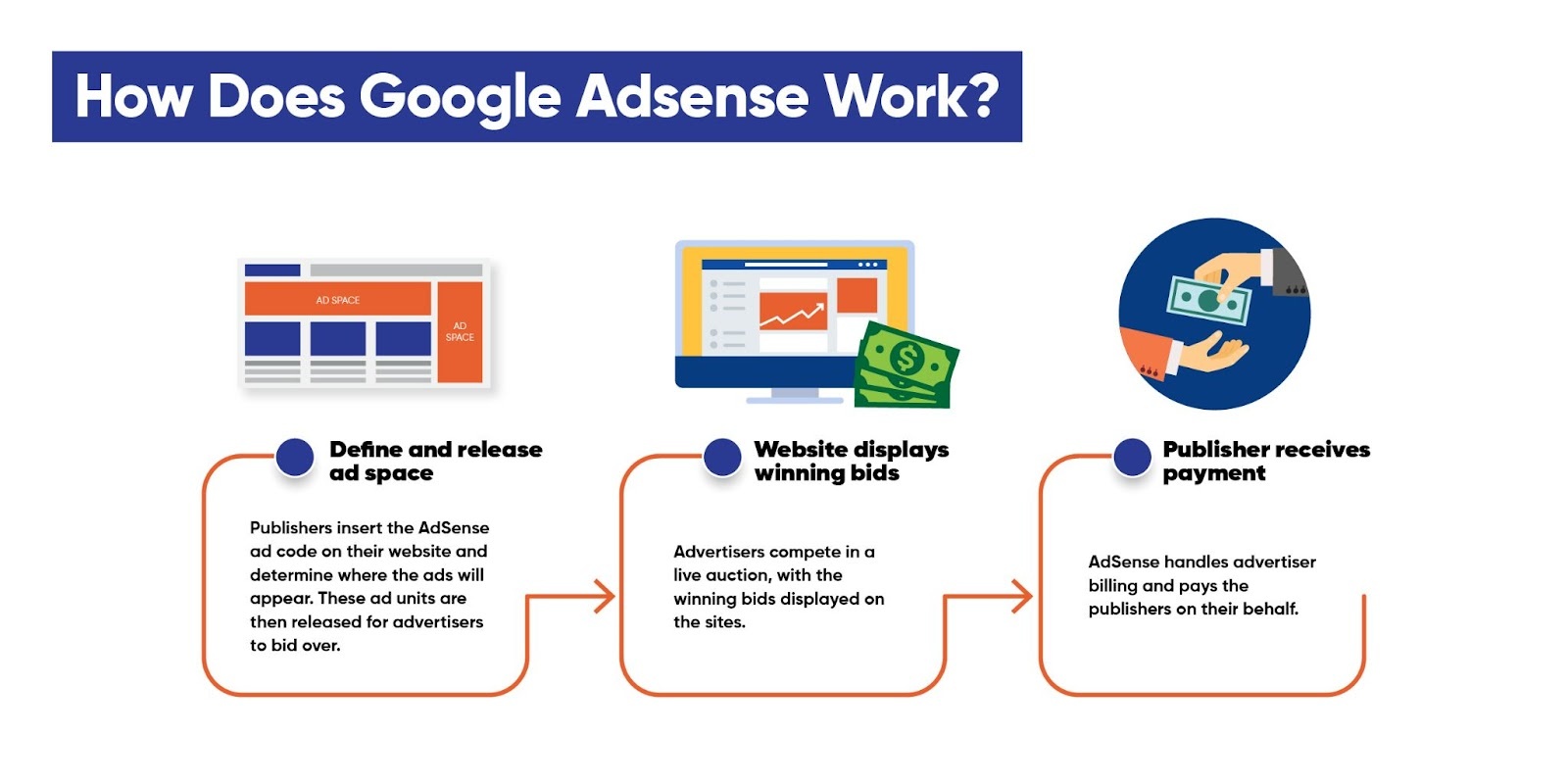
- Google displays ads: Once you sign up for AdSense and get approved, Google will automatically start showing ads relevant to your content and audience.
- You earn moneywhen visitors click on ads: You earn revenue based on either clicks (CPC) or impressions (CPM). The amount you make per click can vary based on the type of ad, your niche, and the region of the visitor.
Why AdSense?
- User-Friendly: AdSense is known for being beginner-friendly. You don’t need any technical skills to get started, and you don’t have to manage advertisers directly.
- Automated Ads: Once you set it up, AdSense handles the ad placement, targeting, and optimization for you, leaving you to focus on content creation.
For bloggers, AdSense is often the easiest way to start earning money with minimal effort. However, to truly maximize your revenue, it’s crucial to understand how Google AdSense works and implement best practices.
2. 5 Key Requirements For Monetizing Your Blog With Google AdSense
Before you start adding ads to your site, you must meet certain requirements set by Google AdSense. Here are the five key elements to getting your blog AdSense-ready:

1. Premium, High-Quality Content
Content is king when it comes to AdSense approval. Google prioritizes blogs that offer original, valuable, and engaging content. A blog with high-quality content has a much better chance of getting accepted into the AdSense program.
Actionable Tip: Post regularly and focus on creating helpful, relevant content for your target audience.
See Also: What Factors Will Cause Remote Jobs Possibly To Disappear In 2024?
2. Adherence To AdSense Policies
Google has strict policies about the type of content that can be monetized. Blogs that contain adult material, illegal content, or copyrighted materials are not eligible for AdSense.
Actionable Tip: Review Google’s AdSense Program Policies to ensure your blog complies with their guidelines.
3. Traffic Generation
To generate meaningful revenue, your blog needs steady traffic. The more visitors your site receives, the more opportunities you have to earn from clicks and impressions.
Actionable Tip: Focus on SEOstrategies to boost organic traffic and keep your visitors engaged.
YouTube Video

How to Make Money with Blogger (with AdSense ads)
4. Responsive Website Design
With more people browsing the web on mobile devices, it’s essential that your blog is mobile-friendly. Google rewards sites that provide a seamless experience across all devices, from desktop to mobile.
Actionable Tip: Use a responsive theme or a mobile-optimized design for better user experience.
5. User Experience (UX)
While you might be eager to place ads on your blog, don’t overwhelm your visitors with too many ads. Google values user experience, so ads should be strategically placed without affecting the readability or navigation of your site.
Actionable Tip: Prioritize clean, clutter-free layouts with ads placed where they enhance the user experience.
3. Types Of Blogs That Make The Most Money With Google AdSense

Some types of websites are naturally more successful at earning AdSense revenue. Let’s look at the most profitable blog categories and why they work well with Google AdSense.
1. Blog Sites
Blogging is a great way to generate steady traffic. Whether you run a niche blog or a general blog, regular content updates are key to keeping readers engaged. Successful blogs typically focus on specific topics like technology, health, finance, and lifestyle.
Example: Websites like The Daily Dotuse AdSense to monetizemillions of impressions per month, placing ads throughout their site to maximize visibility.
Actionable Tip: Focus on a niche topic with high search demand, and ensure your blog provides in-depth coverage of that topic.
2. Forum Sites
If you’re not comfortable writing your own content, running a forum can be a great option. Forums are highly interactive, and they can generate a lot of traffic as users engage in discussions.
Example: CatForum.com generates revenue through AdSense by showing ads to their active members. With thousands of posts and discussions, their ads generate consistent clicks.
Actionable Tip: If you’re running a forum, focus on building a community and make sure your forum is active and well-moderated to comply with user-generated content rules.
3. Free Online Tool Sites
Creating a free tool that adds value to your audience can help you generate traffic and revenue through AdSense. Tools like GIFmaker.me use free services to attract visitors, who are then shown relevant ads.
Actionable Tip: Create a tool that solves a common problem or provides a fun service for your target audience. Optimize for search engines to drive organic traffic.
4. The 5-Step Guide To Setting Up Google AdSense On Your Blog

Getting started with Google AdSense is easier than you might think. Here’s a step-by-step guide to setting up AdSense on your blog:
Step 1: Ensure Your Blog Is AdSense-Ready
Before you apply for AdSense, make sure your blog is set up for success:
- Have at least 20-30 high-quality posts published.
- Ensure your content is original, engaging, and provides real value.
- Make sure your blog complies with all AdSense policies.
Step 2: Sign Up For Google AdSense
Once your blog is ready, sign up for an AdSense account. Google will review your blog to ensure it meets their guidelines. The approval process can take anywhere from a few days to a couple of weeks.
Related: 35 PR Tips To Get Media Coverage For Your Small Business
Actionable Tip: Be patient during the approval process. Make sure all your content is polished and in compliance with AdSense policies.
Step 3: Understand Ad Formats And Types
Google AdSense offers several types of ads, including display ads, text ads, and responsive ads. Each format has its pros and cons, and some may work better than others for your blog.
Actionable Tip: Test different ad formats to see which ones generate the most revenue on your blog.
Step 4: Optimize Ad Placement
Strategically placing ads on your blog is crucial for maximizing revenue. Some of the best locations to place ads are:
- Above the fold(visible without scrolling)
- In-content(within blog posts)
- Sidebar adsfor desktop users
- Actionable Tip: Optimize for both desktop and mobile layouts to ensure your ads are displayed correctly on all devices.
Step 5: Measure And Optimize Ad Performance
Once your ads are live, use Google Analyticsand AdSense reports to monitor performance. You can see which ads are getting the most clicks and impressions, and adjust your strategy accordingly.
Actionable Tip: Test different ad placements, sizes, and formats to continually optimize for higher revenue.
5. Best Practices For AdSense Monetization: The DOs And DON'Ts
The DOs
- Focus on User Experience: Prioritize user-friendly design, ensuring ads do not overwhelm visitors.
- Experiment with Ad Placement: Different placements work for different blogs. Test and optimize for the best performance.
- Use Analytics: Regularly monitor performance and adjust based on data.
The DON’Ts
- Do not manipulate clicks: Google strictly forbids click fraud, and violating this can lead to account suspension.
- Don’t overwhelm your visitors: Avoid placing too many ads, especially intrusive pop-ups or auto-play videos.
- Don’t neglect mobile optimization: Ensure your ads are optimized for both mobile and desktop users.
6. Optimizing Your Content For Higher AdSense Revenue

Once your blog is set up with Google AdSense, it’s crucial to continually optimize both your content and ads for maximum revenue generation. Here's how you can ensure that your content works hand-in-hand with your ads:
1. Focus On High-Value Topics
The key to higher AdSense earnings lies in the topics you choose to write about. Blogs that focus on topics with high advertiser competitiontend to earn higher cost-per-click (CPC) rates. These topics are typically in industries like:
- Finance(loans, credit cards, insurance)
- Technology(software, gadgets, AI)
- Health(fitness, wellness, nutrition)
- Legal services(lawyers, personal injury claims)
By focusing on these high-value topics, you can attract higher-paying ads and ultimately boost your earnings.
Actionable Tip: Use tools like Google Keyword Planner or Ubersuggest to identify keywords with high CPC and target them in your blog posts.
2. Write Longer, In-Depth Posts
Google rewards long-form content that provides substantial value to readers. Longer posts (typically 1,500 to 3,000 words) have a higher chance of ranking well on Google, attracting more visitors, and offering more ad impressions.
Actionable Tip: Aim for at least 1,500 words per post, and incorporate relevant keywords naturally throughout the content. Longer, more detailed posts give you more opportunities to place ads.
3. Create High-Quality, Engaging Content
Google values user engagement, and well-written content is more likely to drive traffic and encourage visitors to stay longer on your blog. This increases the likelihood of users interacting with your ads.
YouTube Video

How To Make Money With Google Adsense For Beginners 2022 ($100 a Day)
Actionable Tip: Focus on long-tail keywords (specific search querieswith low competition) that provide detailed answers to questions your audience is asking.
4. Consistency Is Key
If you want to keep the traffic flowing and ensure that visitors keep coming back to your site, post regularly. Fresh content not only keeps your audience engaged but also signals to Google that your blog is active, improving your chances of ranking higher in search results.
Actionable Tip: Create a content calendar and commit to posting regularly. Whether it’s weekly or bi-weekly, consistency is crucial to building a loyal readership.
7. Advanced AdSense Strategies To Maximize Your Earnings

Once you have a solid foundation in place, it’s time to take your AdSense monetization strategy to the next level. Here are some advanced tactics to increase your revenue:
1. Test And Optimize Ad Placements
Effective ad placement can significantly impact your earnings. Experiment with different positions for your ads, including:
- Above the fold: Ads placed at the top of the page, visible without scrolling, are more likely to get clicked.
- In-content ads: Placing ads within the text of your articles can improve the user experience and increase click-through rates (CTR).
- Sticky ads: These are ads that stay visible as the user scrolls down the page. They can be a great way to increase visibility and engagement with your ads.
- Actionable Tip: Use Google Optimize or A/B testing to experiment with different ad placements, sizes, and formats. Monitor your results and make adjustments accordingly.
2. Use AdSense Auto Ads
Google’s Auto Adsfeature automatically determines the best ad formats and placements for your site. This feature uses machine learning to optimize ad performance based on user behavior and your site’s layout.
Actionable Tip: Enable Auto Ads to save time and allow Google to maximize your ad revenue. Make sure to monitor performance to ensure it's driving results.
3. Leverage AdSense For Search
In addition to display ads, you can add a Google search box to your site. This allows users to search for content on your site and includes relevant ads from AdSense. You earn revenue when visitors click on these ads.
Actionable Tip: Place the search box in prominent areas of your blog, such as in the header or sidebar, to increase the likelihood of clicks.
4. Explore AdSense Experiments
AdSense offers an experimentsfeature that lets you test different ad styles, formats, and placements. This feature allows you to run controlled tests to identify which combinations work best for your audience.
Actionable Tip: Use the AdSense Experiments feature to test changes in your ad settings and determine the most profitable configurations.
8. Understanding Google AdSense Policies And Best Practices

AdSense has strict policies to ensure that both advertisers and publishers are following ethical practices. Violating these rules can lead to account suspension, so it's essential to understand the do’s and don'tsof the platform.
AdSense Content Policies
To remain compliant with AdSense, your content must adhere to Google’s strict guidelines. Adult content, violent content, and anything that promotes illegal activity are prohibited. Additionally, AdSense requires that all content be original and non-plagiarized.
Read Also: 10 Proven Ways You Can Go From Broke To Rich In 2024
Actionable Tip: Regularly review your content for compliance. Avoid using content that could potentially violate Google’s policies, such as copyrighted material or misleading information.
AdSense Click Fraud Prevention
Google AdSense operates on a pay-per-click (PPC) basis, and while this is an excellent way to earn revenue, it also opens up the risk of click fraud. This happens when a person (or a bot) clicks on your ads with no intention of engaging with the content, which could get your account banned.
Actionable Tip: Never encourage users to click on ads, and avoid placing misleading calls to action. Click fraud can result in permanent suspension from the AdSense network.
User-Generated Content
If your blog allows user-generated content (such as in forums or comment sections), ensure that it complies with AdSense guidelines. User-generated content can be difficult to monitor, but it must follow the same rules as your original content.
Actionable Tip: Use moderation tools to monitor user submissions and ensure they comply with AdSense’s content policies.
9. Case Study: A Blogger’s Success With Google AdSense

To illustrate the effectiveness of the strategies outlined above, let’s look at a real-world case study of a blogger who successfully monetized their blog with Google AdSense.
Case Study: Emma’s Wellness Blog
Emma started her wellness blog with the goal of sharing tips on healthy living, nutrition, and fitness. She applied for AdSense after publishing 25 high-quality posts on topics such as diet plans, workout routines, and mental health strategies.
- Traffic Building: Emma used SEOstrategies to optimize her posts for long-tail keywords related to health and fitness. She promoted her blog on social mediaplatforms and built backlinksfrom reputable websites.
- AdSense Setup: After gaining a steady flow of traffic, Emma applied for AdSense and was approved. She strategically placed in-content ads and sticky ads on her posts.
- Optimization: Emma used Auto Ads and A/B testing to experiment with different ad formats and placements. Over time, she fine-tuned her strategy, increasing her click-through rates (CTR) and revenue.
Results: After six months, Emma saw a 40% increase in monthly revenue from AdSense. The key to her success was consistent content creation, strategic ad placements, and ongoing optimization.
Actionable Tip: Learn from Emma’s success by testing, experimenting, and continually refining your AdSense strategy.
FAQ's About Start Adsense Ready Blog
What Is Google AdSense?
Google AdSense is an ad network that allows bloggers to earn money by displaying ads on their site. Revenue is earned when visitors click on or view these ads.
How Do I Make Money With AdSense?
You earn money from clicks and impressions on ads displayed on your blog. The revenue depends on factors like ad type, audience location, and content relevance.
How Do I Get Approved For AdSense?
To get approved, your blog must have original content, clear navigation, and compliance with AdSense policies. You must also have a privacy policyand sufficient content (usually 15-25 posts).
Can Any Website Use AdSense?
No. Your site must follow Google’s content policies and offer original content. Sites with adult or illegal content will be rejected.
What Are The Best Types Of Sites For AdSense?
The best sites include blogs, forums, and free online tools. Sites focused on specific, high-traffic niches work best.
Conclusion
Google AdSense is one of the most accessible and effective ways to earn money from your blog. By following the steps outlined in this guide, focusing on high-quality content, strategic ad placements, and optimizing for performance, you can turn your blog into a revenue-generating machine.